Why shingles are failing in Virginia Beach VA (and it's not just the weather)
Our team responds within 24 hours!

The primary reason standard shingles fail in Virginia Beach is not the weather itself, but an improper installation that neglects the complete roofing *system* required by local building codes. A truly resilient roof depends on a cohesive system of enhanced nailing, corrosion-resistant flashing, and specialized underlayment designed for high-wind and salt-air conditions.
The Familiar Sight on a Virginia Beach Morning
It’s a scene every homeowner in the Tidewater region knows. After a blustery Nor'easter or the remnants of a tropical system pass through, you walk outside to find asphalt shingles scattered across your lawn and your neighbors’. You look up at your roof, see the damage, and sigh, blaming another harsh coastal storm. For years, we’ve accepted this as the cost of living in beautiful Virginia Beach, VA.But what if the wind and rain aren't the real villains?
At WT Anderson, with decades of experience repairing and replacing roofs in Virginia Beach from Sandbridge to the North End, we’ve seen a consistent pattern. While homeowners often point to the weather, the more frequent culprit is a "standard" shingle installation that ignores the specific, code-mandated roofing system required to withstand our region's unique challenges. The failure isn't in the shingle; it's in the shortcuts taken during installation.
It's Not the Shingle, It's the System
Many homeowners believe a roof replacement is just about nailing new shingles to the roof decking. This oversimplification is the root cause of premature roof failure in coastal Virginia. A durable roof is an integrated system where every component works together to defend your home against wind and water.A proper roofing system for a home in Virginia Beach includes:
- The Right Underlayment: Standard felt paper can tear easily in high winds during installation, creating a hidden vulnerability. Modern synthetic underlayments provide a much stronger secondary water barrier against the kind of wind-driven rain we see during the Atlantic hurricane season.
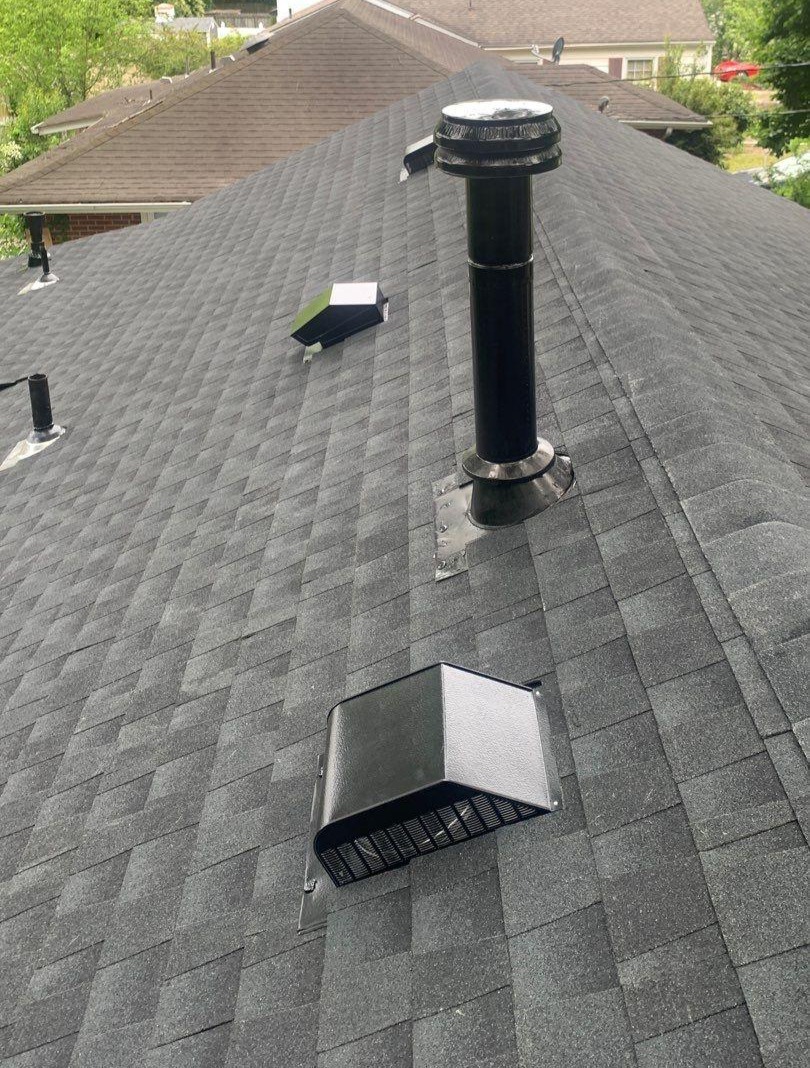
- Properly Installed Flashing: Flashing is the metalwork that protects the most vulnerable areas of your roof—valleys, chimneys, and vents. If it’s not the right material or isn’t installed correctly, it becomes the first point of moisture intrusion.
- Balanced Ventilation: High humidity damage is a real threat in Hampton Roads. A balanced system of intake and exhaust vents (like ridge vents) prevents moisture buildup in your attic, which can rot your roof decking from the inside out and lead to issues like algae growth (the bacteria Gloeocapsa magma that causes those ugly black streaks).
When roofing contractors focus only on the shingles, they miss the bigger picture. The result is a roof that looks fine on a calm day but is unprepared for the reality of our coastal climate.
The Code Is Not a Suggestion: High-Wind Nailing Requirements
Here in Virginia Beach, we are in a designated high-wind zone. This isn't just a weather forecast; it’s a critical legal distinction that dictates how your roof must be built. The Virginia Uniform Statewide Building Code (VCC) is clear that alterations to an existing building, such as a full roof replacement, must comply with the requirements for new construction. This means your new roof must meet today's stringent standards.One of the most frequently missed requirements is the nailing pattern.
- The Standard (and Insufficient) 4-Nail Pattern: In many parts of the country, four nails per shingle is the standard. It’s faster and uses fewer materials.
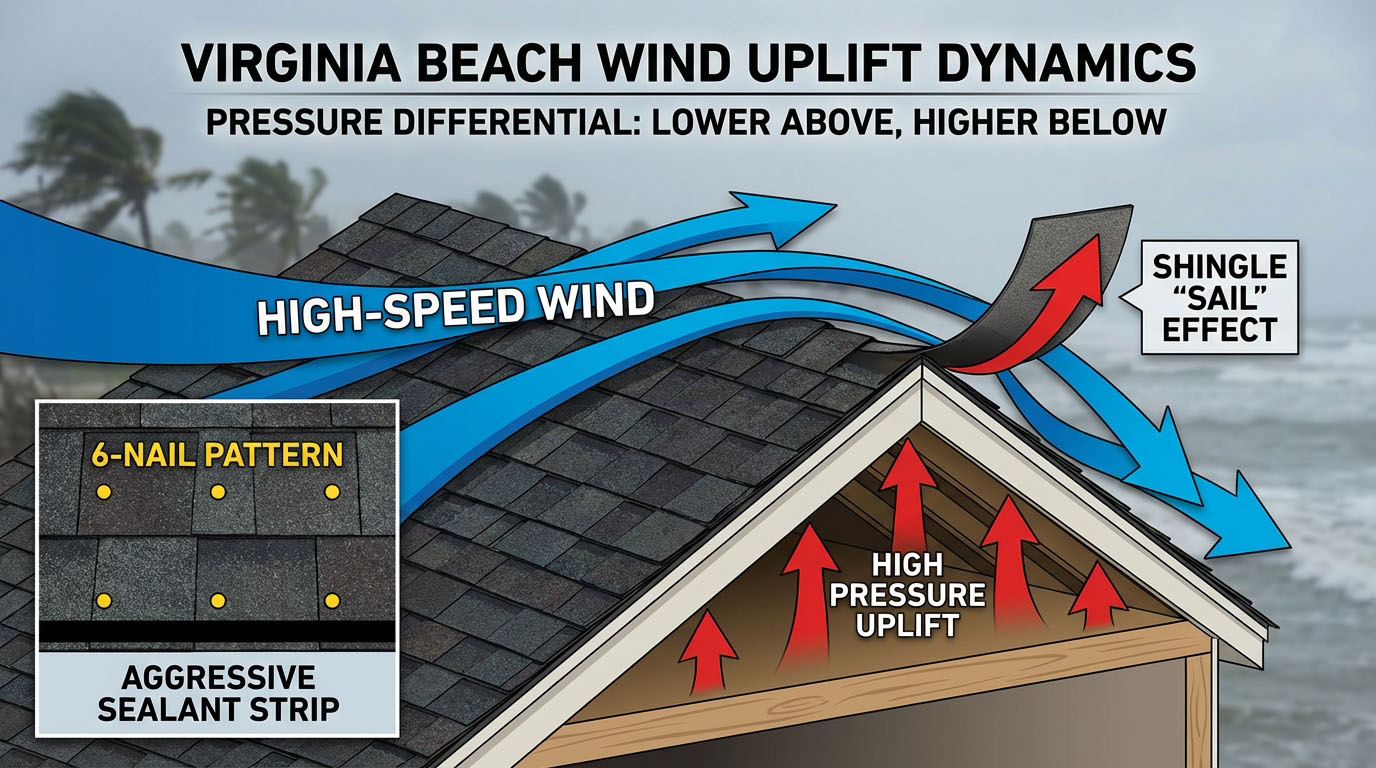
- The Virginia Beach Code-Mandated 6-Nail Pattern: For high-wind zones, the VCC and shingle manufacturers like GAF and Owens Corning require six nails per shingle, placed precisely in the manufacturer's designated nailing zone. This simple change can increase a shingle's wind resistance rating significantly.
This isn't a minor detail. Virginia has worked hard to ensure its building codes protect homeowners. In fact, a 2024 report from the Insurance Institute for Business & Home Safety (IBHS) ranked Virginia first among 18 hurricane-coast states for its building code adoption and enforcement, scoring an impressive 96 out of 100. This dedication to high standards is precisely why choosing local roofing companies who understand and adhere to the VCC is paramount. Skipping the two extra nails might save a contractor a few hours and a few dollars, but it leaves your home critically exposed.
Wind Uplift Dynamics: How Virginia Beach Winds Attack Your Roof
To understand why the 6-nail pattern is so important, you need to understand how wind actually removes shingles. It’s not a simple case of the wind blowing them off. The real damage comes from wind uplift.When high-speed wind blows over your roof, it creates a pressure differential—lower pressure above the roof and higher pressure below it. This pressure pushes up from underneath the shingles, trying to lift them. If the asphalt sealant strip isn't fully engaged or the shingles are improperly fastened, the wind gets underneath and turns them into sails. Studies of hurricane damage consistently show that wind is responsible for greater property loss than water, with roof damage being a primary failure point.This is especially true for older or improperly installed 3-tab asphalt shingles. The adhesive strips on these basic shingles are sometimes rated for winds as low as 60 mph, a speed we can easily see during a strong Nor'easter, let alone a hurricane. Modern architectural shingles, such as GAF Timberline HDZ or Owens Corning Duration, have much more aggressive sealant strips and wider nailing zones, but they still require the correct 6-nail pattern to perform at their peak wind resistance rating.
The Hidden Failure Point: Salt Spray Corrosion
Living near the ocean in Virginia Beach has its perks, but the salt in the air is relentless. While many homeowners worry about UV degradation or granule loss on the face of their asphalt shingles, the more insidious threat is salt spray corrosion.Salt air doesn’t eat away at the asphalt itself. Its primary target is metal. This means the thousands of nails holding your shingles down and the critical flashing around your chimney and vents are in a constant state of attack. An installer who uses standard, non-corrosion-resistant nails and flashing is building a roof with a hidden expiration date.The shingle might look fine for years, but underneath, the fasteners are rusting away. Once a nail head corrodes, it loses its holding power. The shingle is now loose, creating the perfect entry point for wind uplift and moisture intrusion. This is a classic example of a system failure—the shingle itself is still functional, but a cheaper, incorrect component has compromised the entire roof. For our coastal home installations, we insist on materials designed to withstand this environment, from the fasteners to the flashing.
Answering Your Key Roofing Questions
Navigating a roof replacement can be confusing. Here are straightforward answers to some common questions we hear from Virginia Beach homeowners.
How can you tell if a roofer is lying?
A trustworthy contractor will speak in terms of a complete roofing system, not just shingles. Be wary of anyone who gives you a price without a thorough roof inspection. Ask them specifically about the Virginia building code. They should immediately discuss the 6-nail pattern, synthetic underlayment, and corrosion-resistant flashing for our coastal area. If they dismiss these as unnecessary "upgrades," they are not the right pros for a job in Virginia Beach. A professional keeps you informed. As one of our clients noted, we "Kept us well informed and sought our authorization before doing any work in addition to the original contract." That level of communication is a sign of trustworthiness.
What is the 25% rule in roofing?
The "25% rule" is a common provision in building codes, including the VCC. It generally states that if more than 25% of your total roof covering needs to be repaired or replaced within a 12-month period, you are required to replace the entire roof section to bring it up to current code. This prevents a patchwork of old and new materials and ensures the structural integrity of your roof. After a storm, if an inspection reveals widespread damage, a full roof replacement is often not just the best option, but the legally required one.
How long do shingle roofs last in Virginia?
This depends entirely on the type of shingle and, more importantly, the quality of the installation. A basic 3-tab shingle on a home in a less demanding climate might last 15-20 years. Here in Virginia Beach, a standard, code-ignoring installation of that same shingle might fail in 7-10 years. However, a properly installed roofing system using high-quality architectural shingles with a 6-nail pattern and coastal-rated components can reasonably be expected to last 25-30 years or even longer, fully living up to its shingle warranty.
Contractor's expertise in local building codes for coastal areas.
This is non-negotiable. A contractor must demonstrate a deep understanding of the VCC's high-wind zone requirements. This isn't just about pulling a permit; it's about knowing *why* the codes exist and how to build a roof that exceeds them. Given that even a perfect manual installation may have some variance from idealized instructions, as one report notes about the sheer number of nails in a typical roof, expertise and attention to detail are paramount.
Installation of a complete, integrated roofing system vs. just replacing shingles.
Your discussion should focus on underlayment, ventilation, and flashing, not just the shingle brand. The goal is a holistic defense system for your home, not just a new cosmetic layer. The cost of a full system is a long-term investment in durability and peace of mind.Use of materials specifically designed to resist wind uplift and water intrusion.
Ask about the specific products being used.
Are they using algae-resistant shingles to combat black streaks? Are the architectural shingles, like CertainTeed Landmark PRO, rated for the wind speeds we experience? Are they using stainless steel or hot-dip galvanized nails to prevent salt spray corrosion? The material choices matter.
Availability of enhanced, system-wide warranties.
The best roofing contractors, partnered with top manufacturers like GAF and Owens Corning, can offer enhanced warranties that cover the entire system—materials and labor—not just the shingles. This is a manufacturer's vote of confidence in the contractor's installation quality.
Making the Right Choice for Your Needs
The "best" roof isn't a one-size-fits-all solution. It depends on your situation, your home, and your long-term goals.
For the Storm-Damaged Homeowner
You're dealing with an urgent problem. You need a fast, reliable solution to protect your home from further damage. Your priority is finding a contractor who can not only perform a quick, high-quality repair or replacement but also document everything for your homeowner's insurance claims. Focus on finding a team that understands the VCC and can build your new roof to a standard that prevents this from happening again. You need durability and peace of mind, fast.
For the Proactive Researcher
Your current roof is aging, and you want to make a smart, long-term investment. You have time to compare roofing materials, from high-end architectural shingles to options like a standing seam metal roof. Your focus should be on the cost vs. durability calculation. Invest in a complete, code-compliant roofing system. It will have a higher upfront roof replacement cost, but it will save you thousands in premature replacement and repair costs down the road.
For the Skeptical Second-Timer
You've been through this before. A roofer replaced your roof just a few years ago, and it's already failing with shingle cracking and curling or granule loss. You're frustrated and rightly skeptical. You need a contractor who can explain *exactly* why your previous roof failed and demonstrate precisely how their process is different. Demand transparency. Ask to see their certifications, ask about their specific nailing techniques, and ask for an explanation of their flashing and underlayment choices. You are looking for a true craftsman, not just an installer.
Ultimately, building a roof that can withstand the unique challenges of Virginia Beach isn't about using a magic shingle; it's about expert craftsmanship and an unwavering commitment to the building codes that were designed to protect us. We've built our reputation on this principle, delivering for our customers every time. As one happy client put it: "Excellent quality products, fast installations, and pricing is the best. Also always in contact with the customer and always respectful..." That is the standard of service every homeowner deserves.
For a comprehensive roof inspection that focuses on the health of your entire roofing system, contact the expert team at WT Anderson. We'll provide a clear, honest assessment and a free quote for a roof built right for our coastal home.